Defence expenditure was pegged at 1.4 per cent of GDP in the Budget for 2025-26 but it may widen, depending on tensions between India and Pakistan.

The Reserve Bank of India (RBI) is anticipated to make its highest-ever dividend payment to the government this year, providing a significant fiscal boost to address challenges, including those stemming from the ongoing Middle East crisis.

The Reserve Bank of India (RBI) has declared a record Rs 2.87 lakh crore dividend to the government for the 2025-26 financial year, offering significant financial flexibility amidst global economic uncertainties.

Canadian billionaire Prem Watsa's Fairfax Financial Holdings will utilise the expertise of Deepak Parekh and Paresh Sukthankar, former HDFC leaders, as it moves to acquire a 60.72 per cent stake in IDBI Bank for 52,878 crore, with N S Kannan proposed as chairman.

India's Chief Economic Advisor V Anantha Nageswaran stated that the country's balance of payments (BoP) pressure is expected to remain a continuous challenge due to rising imports, commodity dependence, high global interest rates, and intense competition for capital.

BJD MP Santrupt Misra has voiced strong concerns over the Centre's decision to impose a 0.4 per cent Merchant Discount Rate (MDR) on UPI transactions above Rs 2,000, arguing that the government or large financial institutions could easily absorb the costs of maintaining the digital payment network instead of burdening merchants and consumers.

The Reserve Bank of India (RBI) on Tuesday came out with a draft framework on declaration of dividend by banks, as it proposed capping dividend payout to shareholders at 75 per cent of their net profit-- also called profit after tax (PAT).

Indian equities, particularly the Nifty 50, have significantly underperformed their Asian and global counterparts over the past year, with the index down 10.6 per cent. This lag is attributed to factors like rising global oil prices, rupee depreciation, and a lack of participation in the global chipmaker rally that boosted markets like South Korea and Taiwan.
The Reserve Bank of India (RBI) has issued amended directions for bank boards, effective October 1, 2026, to rationalise agenda items and enable more focused engagement on strategy and risk governance, while explicitly defining matters reserved for board approval and periodically reviewing delegated powers.

Shapoorji Pallonji Mistry's statement will be watched closely against the backdrop of the listing battle as well as the Tata leadership contest, with veto votes being cast over the reappointment of N Chandrasekaran as chairman of Tata Sons for a third term.

Indian stock markets are set to be influenced by developments in US-Iran negotiations, crude oil prices, and foreign investor activity in the upcoming holiday-shortened week, according to market analysts.

The Reserve Bank of India (RBI) has announced a record surplus transfer of Rs 2.87 trillion to the central government for FY26, driven by increased income and an expanded balance sheet, despite a reduction in the contingent risk buffer (CRB) to 6.5 per cent.

A crucial annual general meeting (AGM) of Tata Sons, the primary holding company of the Tata conglomerate, was adjourned due to a lack of quorum, specifically the absence of representatives from the Sir Dorabji Tata Trust (SDTT) and Sir Ratan Tata Trust (SRTT). The SRTT is currently under restrictions from the Maharashtra Charities Commissioner, preventing it from making major decisions or holding meetings, which impacted its ability to participate.

The Reserve Bank of India has approved a three-month extension for Keki Mistry as the interim chairman of HDFC Bank, continuing his tenure until September 18, 2026, or until a regular chairman is appointed.

In essence, Tata Sons will continue to be a CIC, whether registered or unregistered. It will have to follow the 90:60 principle.
If it qualifies as belonging to the upper layer, public listing will be one of the regulatory requirements. However, if it qualifies as 'unregistered CIC', it will escape from prudential regulation, explains Tamal Bandyopadhyay.
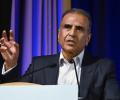
Bharti Airtel is strategically shifting its focus towards data centres, cloud services, and financial services as key drivers for its next phase of growth, leveraging significant past investments in digital infrastructure, as outlined by Chairman Sunil Mittal in the company's Annual Report for 2025-26.

'Even last year, when India bought gold, the physical quantity was much less than the previous years.'

The idea of back-loading the target of fiscal consolidation is perhaps guided by the government's desire to be prepared for any adverse developments in the coming year, points out A K Bhattacharya.

Bank of Baroda economists project India's GDP to grow 6.5-6.8 per cent in FY27 but warn that the fiscal deficit could overshoot the budgeted 4.3 per cent target, potentially reaching 4.7-4.8 per cent of GDP due to subsidy overruns, excise duty cuts, and oil marketing company losses.

Cautious optimism over US-China trade talks after US President Trump said his trade negotiators had received two "very good calls" from Beijing also influenced the local currency, dealers said.
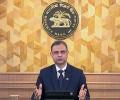
The weakening of inflation, prospects of economic growth, geopolitical uncertainty and comfortable system liquidity may result in the Reserve Bank of India's (RBI) Monetary Policy Committee (MPC) to cut the repo rate by another 25 basis points, opine top economists. They also said the external economic pressures like trade policies and others would require continued RBI's accommodative stance and policy support for the Indian industry to sustain the growth.

The Reserve Bank on Wednesday approved a Rs 2.11 lakh crore dividend payout to the central government for 2023-24, more than double the amount it paid for the previous 2022-23 financial year. The decision was taken at the 608th meeting of the Central Board of Directors of the Reserve Bank of India held under the chairmanship of Governor Shaktikanta Das.

'At the first sign of real trouble, that money will move. There will be a run.'

The Reserve Bank on Friday announced a record Rs 2.69 lakh crore dividend to be paid to the government for the fiscal ended March this year, 27.4 per cent more than the payout in 2023-24. The Reserve Bank had transferred Rs 2.1 lakh crore dividend to the government for the fiscal 2023-24.

The central government's fiscal deficit fell to 0.8 per cent of the full-year target at the end of May, mainly due to a whopping Rs 2.69 lakh crore dividend received from the Reserve Bank of India. The fiscal deficit, or gap between the government's expenditure and revenue, had touched 11.9 per cent of the Budget Estimates (BE) for 2025-26 or Rs 1.86 lakh crore in April.

'Self-declaration from the customer in case of no change in KYC information or change only in the address details may be obtained.'

While the fiscal year has just begun, any windfall surplus will be welcomed by the government as it bids to meet the fiscal deficit target of 5.9 per cent of GDP, amidst lack of clarity on exactly to what extent will recession in the West impact India's trade and tax collections.

There are hopes of a turnaround in overall corporate earnings after six quarters of single digit growth.
Reserve Bank of India (RBI) on Friday said its board has approved a dividend payment of Rs 30,307 crore to the government for the financial ended March 2022. The board approved the transfer of Rs 30,307 crore as surplus to the central government for the accounting year 2021-22 while deciding to maintain the Contingency Risk Buffer at 5.50 per cent, RBI said in a statement. The decision on the dividend payment was made in the 596th meeting of the Central Board of Directors of RBI, headed by Governor Shaktikanta Das, held on Friday.

The Reserve Bank of India's (RBI's) record surplus transfer to the government has raised hopes among bond traders that the government might reduce its gross borrowing for the current financial year (2024-25/FY25) by up to Rs 1 trillion. The RBI approved a dividend of Rs 2.11 trillion for the central government for 2023-24, marking an increase of roughly 141 per cent from 2022-23 (FY23). In addition, the contingency risk buffer has been raised to 6.5 per cent from the previous 6 per cent.
The size of the Reserve Bank's balance sheet as on March 31, 2025 increased by 8.20 per cent year-on-year, leading to a bumper dividend of Rs 2.69 lakh crore for the central government. Increase on assets side was due to rise in gold, domestic investments and foreign investments by 52.09 per cent, 14.32 per cent and 1.70 per cent, respectively, said the RBI's Annual Report for the Year 2024-25 released on Thursday.

The Malegam committee on the RBI's capital adequacy had suggested that the RBI must move away from its methodology to calculate the foreign exchange gains to a weighted average cost-based valuation method. Central bank may done away with provisioning requirements, to enable higher transfer of surplus in the 2017-18 fiscal, analysts say.
The Reserve Bank of India (RBI) booked massive gains on its foreign currency sales and needed to provide much lesser for its reserves in 2020-21 (FY21), helping it to carve out a significant Rs 99,122-crore dividend for the government, revealed the RBI's annual report for FY21. By doing so, the central bank's risk buffers have reduced to the bare minimum, which may restrict some of RBI's scale of operations, and would likely hamper dividend payout for financial year 2021-22, said analysts. The annual accounts are for nine months ended March 31, 2021 since the RBI changed its accounting year from July-June to April-March from FY21.

In response to the panic triggered by Trump's trade policies, the RBI net sold approximately $43 billion in the second half of FY25 to curb volatility, as the rupee plunged to a low of 87.95 per dollar in February this year.

Markets regulator Sebi board on Wednesday approved a series of measures aimed at improving investor convenience, easing compliance norms, and deepening participation in the capital and debt markets.
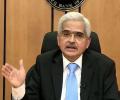
Reserve Bank Governor Shaktikanta Das on Tuesday said the fiscal-monetary coordination was at its best during the last six years even as he thanked Prime Minister Narendra Modi for giving the opportunity to head the monetary authority of the country. Das, in a series of posts on X, on his last day of his six-year term as RBI Governor, also thanked the Finance Minister, various stakeholders and his colleagues at the central bank.

This demand comes at a time when the government is falling short of its revenue targets due to dwindling tax and low disinvestment receipts. It could account for the dividend in the upcoming Union Budget on February 1. RBI is, however, yet to take a final call on the government's demand and might decide on this at its central board meeting scheduled for February 15 in New Delhi.
SP Group chairman Shapoorji Pallonji Mistry on Friday reiterated calls for public listing of Tata Sons to bring transparency, amid infighting among trustees of Tata Trusts which controls a 66 per cent stake in the holding company of the salt-to-software conglomerate. Shapoorji Pallonji family is the single largest minority shareholder with about 18.37 per cent in Tata Sons.

Shaktikanta Das will demit the office on Tuesday after completing six years as the 25th Governor of the Reserve Bank of India. Revenue Secretary Sanjay Malhotra will replace him as the 26th Governor. He was appointed as the Governor on December 12, 2018, after the abrupt exit of Urjit Patel.

The interim dividend will help Narendra Modi-led government partly bridge the deficit its budget had developed after the announcement of a Rs 75,000 crore a year cash dole scheme for small farmers.
